
Vero Beach Surgical Arts
Facial Injuries: What Do I Do?
It’s important to know what to do when you or someone close to you has been injured, especially when it comes to facial injuries. The inside of your mouth is made up of delicate soft tissues that when cut can become infected and easily damaged if the wound isn’t taken care of quickly. Anyone who has had a facial laceration knows that there is a high degree of emotional and physical pain involved when it comes to a facial laceration. So what should you do?
 A laceration is a tear or jagged wound and is usually caused by blunt trauma. If you’ve been in an accident and there is any kind of trauma to your face, it is important to seek emergency assistance right away. Lip lacerations are one of the most common types of facial injuries and require careful repair. Lacerations are closed using silk or gut sutures and are done carefully in order to prevent any cosmetic damage. If a tooth is knocked out you should place it in salt water or milk as soon as possible. The sooner the tooth is placed back into the dental socket, the better chance it has of surviving. Do not clean or wipe off the tooth since there are crucial parts of the tooth that could become damaged.
Replanting teeth and treating tooth fractures can be handled by an oral surgeon along with facial trauma but if you have been involved in a serious accident you should go to the closest hospital emergency room as soon as possible. Facial bone fractures cannot be treated with a cast like other parts of the body. The surgical placement of plates around the affected area is a recent development in medicine that allows for a faster recovery time and involves the fewest incisions necessary.
Any kind of traumatic injury to your face is serious and should be addressed immediately to prevent further damage and scaring. If you’ve had a recent injury and think you may have a facial bone fracture, call us immediately to schedule a consultation.
Serving Patients with Special Needs
We are committed to making care available for all patients who need it, regardless of special healthcare needs. Patients with special needs include the elderly, those with limited mobility, mentally disabled individuals, immuno-compromised people and those with mental illness. Specific diseases that can frequently hinder proper oral health care include autism, Alzheimer’s, Parkinson’s, Cerebral Palsy, Multiple Sclerosis and Down syndrome.
 While treating a patient with special needs, we strive to ensure:
- A friendly and comfortable environment
- Sensitivity and compassion from team members
- Predictable experiences at each appointment
Our team possesses the compassion and understanding that is imperative when caring for a special needs patient. Some cases involving severe disabilities may require specialized equipment and anesthesia. We realize that each individual with special needs is a unique case and will require different systems and skills to properly treat. We are confident we can provide competent care for the majority of patients who are labeled as special needs.
For patients who are specifically incapable of ideal hygiene, it is essential that the people in daily contact with them become involved in their oral healthcare requirements. If you are a caregiver for a patient with special needs, the best course of action to determine if we can offer treatment is to call our office with any questions and possibly reserve an appointment to tour our facilities. If more complex oral care is required, we will refer you to the appropriate specialist who also works with the special needs population.
Dental Implants: Learning the Basics
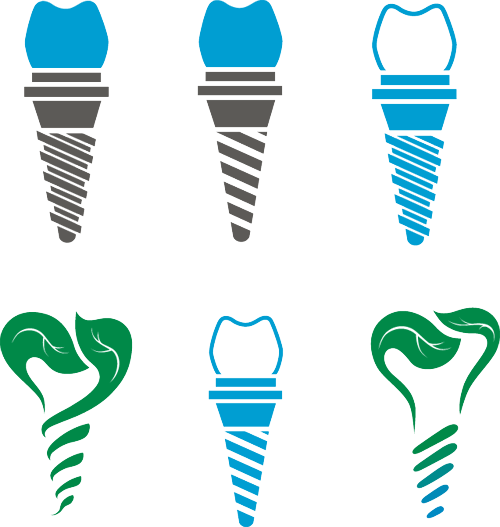 Did you know that over 69% of adults in America are missing at least one tooth? Whether it is from an accident, neglect, or even being born without certain teeth, not everyone is supporting a full set of teeth. There are many solutions to replacing missing teeth, each with its own benefits. With the influx of technology and precision of modern dentistry, dental implants are becoming more affordable, and are the premier long-term solution for missing teeth. Dental bridges tend to be a cheaper alternative to dental implants, but over time a single dental implant is generally more cost-effective. Dental implants can last decades or even a lifetime, which allows a patient to treat the implant as they would their real teeth, and continue on with life without having to worry about them. Whether you’re in the market for one tooth, or multiple teeth, dental implants not only can lower your overall healthcare costs, but also increase your quality of life!
How the implant works:
In place of the original root where the tooth was, a dental implant is connected to the existing bone, as a base, and can then stably hold the new (fake) tooth in place.
Am I a candidate for dental implants?
The quick answer is: “most likely yes.” Restrictions such as age do not apply to the possibility of receiving dental implants. There are very few restrictions that would prevent a patient from receiving dental implants and they include: Those who do not have enough existing bone in the jaw, and those who have had radiation to the jaw (from cancer or similar treatments), which could prevent fusion of implant to the bone. Recent studies have even shown that even patients with diabetes have little to no restrictions in the ability to receive dental implants.
If you are interested in dental implants, give us a call today and see how we can help you!
The Many Faces of Tooth Pain
 Many people think that a painful tooth means they need a root canal treatment. While that is sometimes true, it’s not always the case. In fact, there are many other reasons that teeth can hurt!
Here, we offer a guide to some common types of tooth pain and what that pain may be trying to tell you:
Sensitivity to hot and cold foods:
If the pain is short-lived, you probably do not have a serious problem, but more likely a loose filling or a small amount of gum recession that has resulted in root surface exposure. Use sensitive teeth toothpaste and a soft brush with an up and down motion. If this doesn’t help after a week or so, give us a call.
Heat sensitivity after an appointment:
Some types of dental work can inflame the pulp inside your teeth, causing sensitivity for several weeks. If it lasts longer than that, let us know.
Sharp pain when biting:
Sometimes sharp pain can be caused by a loose filling, other times it may signal that there is a crack in your tooth. Either of these scenarios requires evaluation by a professional, so please give us a call.
Pain/Sensitivity lasting longer than 30 seconds:
Often this means that the pulp (innermost part of your tooth) has been damaged. Without intervention, you may lose this tooth so it is important to call us to find out if you may need root canal treatment.
Frequent, dull aching in the jaw.
This can happen when excessive grinding of the teeth happens (bruxism), or it could even be a sign of a sinus headache or infection. Please call us for more information.
Severe pain, pressure or swelling of the gums:
This may mean that you have an abscessed, infected tooth that may have spread to other tissues in the mouth. This is a serious situation that requires an immediate call to our office for instructions.
Is it Snoring or is it Sleep Apnea?
We all know that a little bit of snoring here and there is perfectly normal. So how do you know when it’s snoring that you’re dealing with and when it’s sleep apnea?
 Rest assured, we get this question all the time. And the answer is that while a formal diagnosis has to be done by us here in the office, you may be able to get a better idea of which scenario you are dealing with simply by answering a few questions at home.
Here are some of the most commonly reported symptoms of sleep apnea. Do you experience any (or several) of these? If so, give us a quick call and we can schedule a consultation to diagnose (or rule out) and treat your condition.
- Snoring with pauses, after which choking or gasping follow. Ask a bed partner to observe your sleep habits or set up a recorder overnight.
- Excessive sleepiness (falling asleep) during the day. This happens because the breathing pauses during the night cause your brain to repeatedly disturb your sleep just enough to make you start breathing again. Consequently, you never spend enough time in the restful part of sleep to be fully rested the next day.
- Memory problems, concentration problems
- Headaches, especially in the morning
- Frequent trips to the bathroom during the night
- Dry mouth in the morning
- Moodiness, irritability and depression
While sleep apnea is a fairly common sleep disorder, it is an important one to tackle because it can cause damage to the organs over time. Treatment options range from CPAP machines that give pressurized oxygen while you sleep to surgery.
If you think that you may have sleep apnea, please don’t hesitate to contact us for a consultation.
What’s In a Bone Graft?
The practice of bone grafting is nothing new. In fact, it goes back hundred of years to a time when a Dutch doctor implanted a dog’s bone into an injured soldier’s skull. The soldier later wanted it removed but it could not be removed, as it had bonded so closely to the bone. This brings up a very common question that we hear in our practice: What is a bone graft made of?
 What the Dutch doctor didn’t know was that the implanted bone was likely resorbed by the patient’s body and replaced with his natural bone. This natural process is called “guided bone regeneration”, and it is one of the reasons that bone grafting has worked so well over time!
Naturally, patients are concerned about where their bone grafting material has come from. But in all cases, we stress that the material that we implant is not the final material that you will have in there. Bone grafting material is really just a place-holder, it encourages (and fools) your body into producing more bone in that site, and in the process resorbs the material that we have implanted.
Here are some common sources for bone grafts:
- The skull, hip, and lower leg bones are very effective and common donor sites.
- Tissue banks may be used when more bone is needed.
- Shavings: If we drill into your jaw, naturally there will be shavings that are produced during the procedure, and often they make ideal bone grafting material!
- Synthetic bone grafting materials.
It is natural to be concerned about what type of tissue we are implanting into your body! Please don’t hesitate to ask us questions about this or your other upcoming procedures.
The History of Bone Grafting
 The concept of bone grafting is nothing new. In fact it has been an important part of medicine as far back as the early 1600’s and in recent years has become a standard procedure for people who need a dental implant or have had a traumatic jaw injury. Shortly after the invention of the microscope, the Dutch doctor Jacob van Meekeren performed the first bone grafting operation on a soldier with a damaged skull. Unfortunately, back then doctors didn’t have the knowledge or bone grafting materials that we have today and in order to save the soldier, Jacob van Meekeren was forced to use a piece of dog bone as implant material. Van Meekeren was pleased with the surgery’s success, but it wasn’t until the soldier returned asking to have the implant removed that van Meekeren discovered just how successful it really was!
In the 1600’s, the Christian church looked at things a little differently and this poor soldier with a piece of dog bone in his skull was excommunicated after the church considered him to be part dog. What was upsetting for the soldier aided in the discovery of how well bone grafting actually worked. In the process of attempting to remove the bone graft, van Meekeren discovered that the bone had healed too well and was actually irremovable!
Bone grafting developed over the next 150 years and by 1821 the first graft of tissue from one point to another of the same individual’s body, known as an autograft, was performed in Germany. During WWI and WWII, bone grafting continued to develop as more soldiers became crucially wounded and a need for advanced surgeries became necessary. After another fifty years the first synthetic ceramic product was cleared for use in 1991.
As you can see, bone grafting has a much longer history than you might have imagined! To find out if you are a good candidate for bone grafting, give us a call!
On the Field and On the Court: Facial Injuries
 It used to be that we would see most of our sports-related facial trauma patients in the fall and winter, when sports participation typically reached its highest point. But nowadays, we see a steady stream of sports injuries to the face in our office year-round. Because more children, teens and adults participate in sports in all four seasons (which is great), we see more sports-related facial injuries now than ever before (not so great).
Not only is the face the most vulnerable part of the body during a game, it is also almost always under-protected. Facial injuries account for about 11-40 percent of all sports injuries. Even in a “no-contact” or “less-contact” sport where player-to-player injuries are rare, a person can still be hit by a ball, bat, club or other item and experience trauma to the face.
Two types of sports-related facial traumas make up the majority of cases we see:
- Soft Tissue Injuries: Lacerations are a common type of injury when playing a variety of sports. In addition to cleaning and suturing the cut, we also pay special attention to providing for the best possible cosmetic result and thoroughly examining any nerves, glands and ducts that may have been injured.
- T-Zone Fractures: Also very common with sports injuries are fractures of the nose, zygoma (cheek bone) and mandible (jaw). Because we can’t put a cast on the face, sometimes fractures must be stabilized using wires, screws and plates.
How to Prevent Facial Injuries on the Field and on the Court:
Many of the most common sports-related facial injuries are also preventable. Here are some of the best ways to protect your face when playing any sport where injury to the tooth or face is a risk:
- Mouth Guards: Simple, inexpensive and increasingly mandatory in many sports, mouth guards are the first defense against injury to the tooth, and may even help to lessen or prevent concussions!
- Face Masks: As time goes on, you will see more and more sports, most recently softball, requiring facemasks to protect young players.
If you have any questions about how to protect yourself from sports-related facial trauma, don’t hesitate to ask us!
Dental Implants: A Three-Step Procedure
One of the most common questions we hear from patients when it comes to dental implants is “Why does it take three separate procedures?”
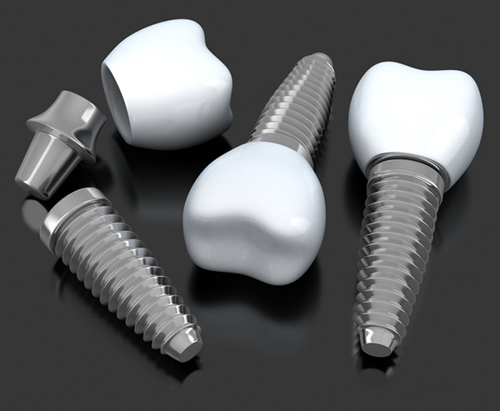 It helps to understand that within the entire dental implant process, there are not just three stages, there are also three important parts to the final product that replaces your tooth. First, there is the implant itself, which is the metal rod that we surgically implant into the bone. Next, there is the abutment, which connects the implant to the artificial tooth. And lastly, the crown (or prosthetic tooth) itself.
The fact that the process has three physical components alone doesn’t tell the whole story though. Here, we explain why the most commonly employed dental implant method is split up into three separate procedures.
Step One: Placing the Implant
The first stage of the dental implant process is to bury the implant in the jaw bone via a surgical procedure. The dental implant replaces the tooth root, and requires healing time. During this healing time, osseointegration (the integration of the bone with the implant itself) occurs. The bone cells actually attach to the implant rod, filling in the spaces to secure the implant in place for permanent residency. The healing time usually takes from 3-6 months.
Step Two: Placing the Abutment
The abutment is a post that connects the implant to the prosthetic tooth. Essentially, the abutment is a bridge that spans through the gum line so that the implant itself remains buried. As with the implant, the abutment has a healing period of its own. The gum around the abutment must heal and form a cuff or collar around it before the crown can be placed.
Step Three: The Prosthetic Tooth
Once the implant site and abutment have successfully integrated, the prosthetic tooth is fabricated and installed.
If you have any questions about the dental implant process, give us a call!
Heart Disease and the Importance of Good Oral Hygiene
 Did you know that poor oral hygiene could increase your chances of developing heart disease? Practicing good oral health habits isn’t just an important part of preventing tooth decay; it’s crucial in maintaining your overall health. But how are heart disease and oral health connected? What we’ve come to understand is that bacteria from infected gums can dislodge, enter the bloodstream and attach to blood vessels, which can increase clot formation. Clots decrease blood flow to the heart and in turn cause an elevation in blood pressure thus increasing the risk of a heart attack.
We can help patients who have a history of heart disease by examining them for any signs of oral pain, infection or inflammation. Brushing and flossing combined with annual check-ups will help to fight the harmful bacteria that cause inflammation and eventually lead to heart disease. Check out these oral hygiene facts and make sure to establish a routine to ensure a great smile and a healthy life.
According to the American Dental Hygienists Association and the Centers for Disease Control and Prevention:
- Eating healthy snacks like celery, carrots, or apples help clear away food loosely trapped in-between teeth.
- The leading oral health problem for infants is baby bottle tooth decay, which can be caused when babies are given a bottle filled with sugary liquids, like milk or juice, when put to bed.
- Nearly 78% of Americans have had at least one cavity by age 17.
- Men are more likely than women to have more severe dental diseases and oral cancer occurs twice as frequently in men as women.
- Dental fluorosis (overexposure to fluoride) is higher in teens than in adults and highest among those aged 12–15.
- Three out of four patients don’t change their toothbrush as often as is recommended. Toothbrushes should be changed every two to three months and after illnesses.
Issues that go untreated can end up costing a lot more than routine visits to your dentist. Prevention through daily cleaning and regular office visits is the best for both your health and your budget. Remember, regardless of how old you are, it’s never too late to start taking serious care of your teeth and mouth.