Bone Grafting for Dental Implants
Dental implants need bone. When the jaw does not have enough bone where an implant needs to be placed, bone grafting builds it back. At Vero Beach Surgical Arts, Dr. J. Andrew Colgan uses a range of grafting materials and techniques to prepare the jaw for implant placement, often as a step in a broader implant treatment plan.
Bone grafting is one of the most common procedures we perform, both as a stand-alone visit for patients planning future implant treatment and as part of the day of implant placement.
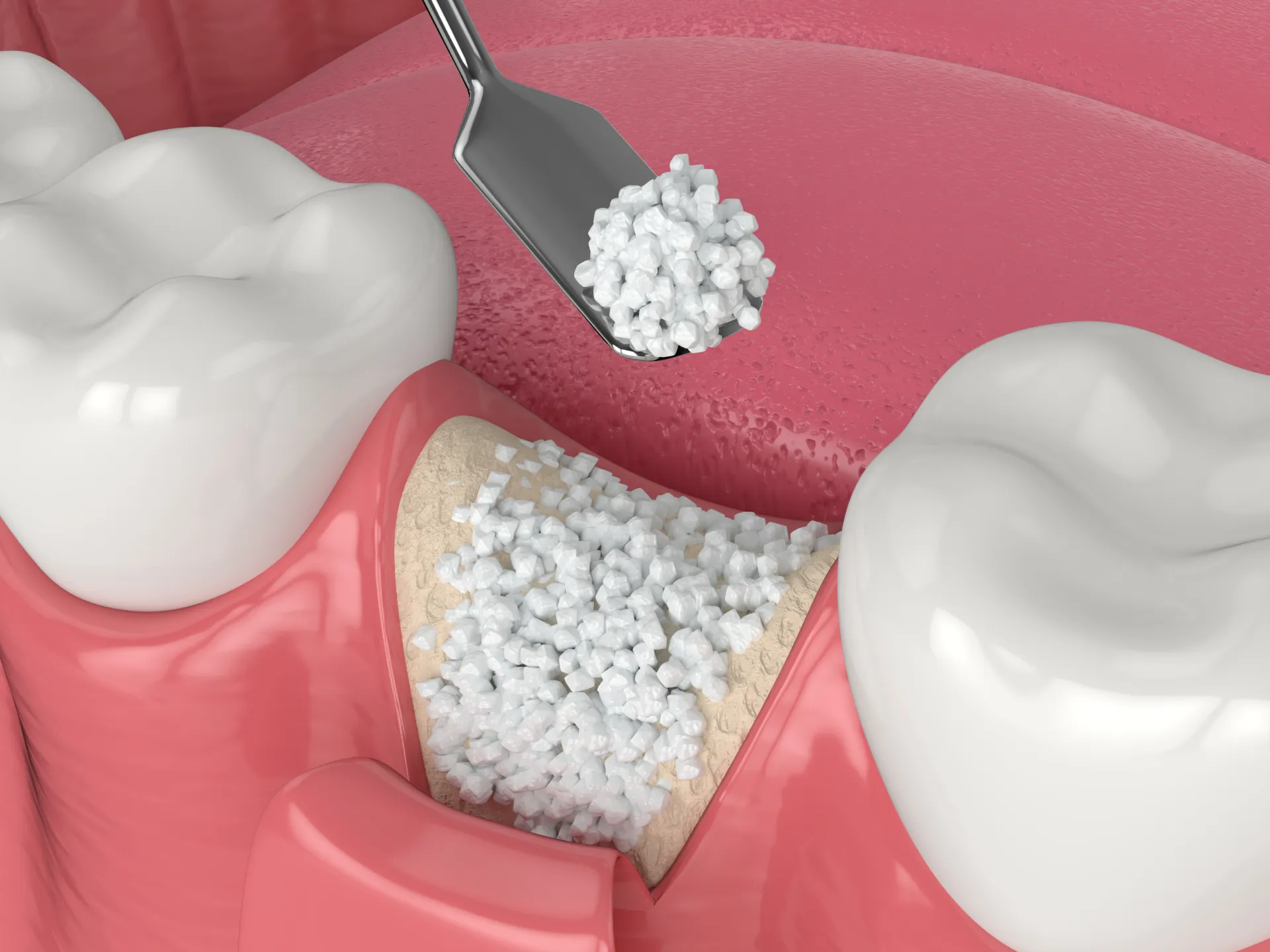
Why Bone Grafting Is Sometimes Needed
The jawbone needs stimulation from tooth roots (or implants) to maintain its volume. When teeth are extracted and not replaced, the bone in that area shrinks. This is called resorption, and it happens to everyone after tooth loss. The longer an area has been without a tooth, the more bone has typically been lost.
Bone loss can also happen from:
- Periodontal (gum) disease that has destroyed the bone around teeth
- Trauma that has fractured or damaged the bone
- Long-term denture wear, which accelerates resorption of the underlying bone
- Infection or cyst that has caused bone loss around a tooth
- Failed prior implants that left a defect when removed
Without enough bone, an implant cannot be safely placed. Bone grafting solves this by rebuilding the foundation.
What Happens If You Skip the Graft
Many patients ask, reasonably, whether they can just go straight to the implant. The honest answer is that it depends on the bone you have.
If bone is adequate, no graft is needed and the implant is placed directly.
If bone is inadequate and grafting is skipped:
- The implant cannot be safely placed in that position
- Placement in compromised bone leads to failure rates dramatically higher than properly prepared sites
- Implants placed in poor bone are more likely to develop complications years later
- Aesthetic outcomes (especially in the front of the mouth) may be compromised by gum recession over thin bone
Bone grafting is not an upsell. It is a foundation step that determines whether the implant treatment succeeds or fails over the long term. Dr. Colgan will tell you honestly whether grafting is needed in your case.
When Bone Grafting Is Performed
Bone grafting fits into the implant treatment timeline in three common scenarios.
At the time of extraction. A small graft (called socket preservation) is placed into the empty socket after a tooth is removed. The bone in the socket is preserved, ready for a future implant placed three to four months later. This is the easiest and most predictable form of grafting.
Before implant placement. A larger graft is performed several months before the implant goes in, rebuilding the bone first. Larger ridge defects, vertical bone loss, and severe atrophy typically require this approach.
At the time of implant placement. In some cases, a small graft and the implant can be placed in the same visit. This works well when the defect is small and the implant can achieve initial stability.
The right timing depends on the size of the defect and the planned timing of the implant. Dr. Colgan reviews your imaging and walks you through the options at consultation.
Types of Grafts We Use
The right grafting material depends on the size of the defect, the location, the timing of the planned implant, and patient preference. Options include:
- Autograft. Your own bone, taken from elsewhere in the mouth (typically the chin or back of the jaw). Considered the historical gold standard. Excellent biological activity. Requires a second surgical site, which most patients prefer to avoid for routine grafting.
- Allograft. Processed human donor bone. Thoroughly tested, safe, and effective for most grafting needs. The most common material for routine cases.
- Xenograft. Processed bone from another species (typically bovine). Provides excellent scaffold for new bone formation. Often used in sinus lifts and ridge augmentation.
- Alloplast (synthetic). Bioactive materials that stimulate bone regeneration. Useful in select cases where biological materials are not preferred.
For challenging cases, we pair grafts with platelet-rich plasma (PRP) to accelerate healing, or with bone morphogenic protein (BMP) for stronger regenerative signaling in larger defects.
Dr. Colgan selects the grafting strategy case by case, not by a single default protocol.
Related Bone Procedures
Different grafting procedures address different parts of the jaw.
- Sinus Lift: When the upper back jaw needs vertical bone height beneath the sinus floor. The sinus membrane is gently lifted and graft material is placed underneath.
- Ridge Augmentation: When the jaw ridge has narrowed or shrunk and needs width or height restored before implant placement.
- Socket preservation: A small graft placed at the time of extraction to maintain the bone for a future implant.
- Block grafting: A larger graft taken from another site, used for severe defects.
The specific name of your graft depends on the location and approach. The underlying principle is the same: rebuild the bone so that implant treatment is possible and successful.
What to Expect From Surgery
Most bone grafting procedures are performed in our office under local anesthesia or IV sedation. The procedure typically takes 30 to 90 minutes depending on the size of the graft. You go home the same day.
The procedure itself involves:
- Numbing the surgical site
- Opening the gum tissue to access the bone defect
- Placing the graft material in the defect
- Sometimes covering the graft with a protective membrane
- Closing the gum tissue with stitches (often dissolving)
You leave with detailed post-operative instructions, prescriptions for comfort and infection control, and direct phone access to our office.
Recovery
Recovery from bone grafting is typically straightforward:
- First 24 to 48 hours: Some swelling and mild discomfort, well managed with prescribed medication.
- First week: Soft diet, avoidance of pressure on the graft site, no smoking.
- Weeks 2 to 4: Most patients return to normal activities. The graft begins to mature.
- Months 3 to 6: The graft matures into native-quality bone, ready for implant placement.
You will have one or more follow-up visits to confirm healing is progressing as expected.
Cost of Bone Grafting in Vero Beach
Bone grafting costs vary based on the size of the graft, the materials used, whether biologics (PRP, BMP) are added, and whether the graft is performed as a stand-alone procedure or combined with another surgery.
Generally:
- Socket preservation at the time of extraction is a modest add-on to the extraction fee
- Larger ridge or sinus grafts are priced as separate procedures
- Complex grafting involving block grafts or BMP carries additional cost
We provide a written estimate at consultation, verify insurance benefits, and offer financing through PatientFi and CareCredit. Many dental plans cover at least a portion of bone grafting when it is medically necessary to support an implant.
Frequently Asked Questions
Is bone grafting painful?
Most patients describe the discomfort as mild and manageable, especially compared to what they imagined. We provide prescription pain medication for the first day or two; most patients transition to over-the-counter medication quickly.
How long does bone grafting take to heal?
Healing varies by graft size. Small socket preservation grafts may be ready for an implant in three to four months. Larger ridge or sinus grafts may need six months or more.
Will I be without a tooth during the healing period?
Often yes in the graft site. Many patients wear a temporary tooth replacement (a flipper or temporary partial) during the healing period if the area is visible.
Will my insurance cover bone grafting?
Coverage varies. Many dental plans cover at least a portion of bone grafting when it is medically necessary to support an implant. Some medical plans also cover grafting in trauma-related cases. Our team verifies your benefits before treatment.
What is the success rate?
When performed by an experienced oral surgeon with proper case selection, bone grafting has a very high success rate. Failed grafts are uncommon and are typically related to infection, smoking, or systemic health factors.
Can I have an implant placed at the same time as a graft?
Sometimes yes. When the defect is small and the implant can achieve initial stability, we can place both in one visit. Larger defects typically need staged treatment.
Is autograft (my own bone) better than other materials?
Autograft has been considered the historical gold standard, but modern allograft and xenograft materials, especially when combined with PRP or BMP, can achieve excellent results without harvesting bone from a separate site. For most patients, the modern combination materials produce equivalent outcomes with less surgical involvement.
What happens if I do not have a graft?
If bone volume is inadequate and you skip the graft, an implant cannot be safely placed in that location. Trying to place an implant in inadequate bone significantly increases the risk of failure, infection, and long-term complications. Bone grafting is not optional for cases where it is clinically indicated.
Can smoking affect my graft?
Yes. Smoking significantly reduces blood flow to the surgical site, impairs healing, and dramatically lowers graft success rates. We strongly recommend stopping smoking before and during the healing period.
How long after grafting can I get my implant?
Most sites are ready for implant placement three to six months after grafting. Larger grafts may need longer. Your follow-up imaging confirms the bone has matured before we proceed.
Are there alternatives to grafting?
In some cases, the implant plan can be redesigned to use available bone in different positions (such as angled implants), avoiding the need for grafting. In other cases, grafting is the only option. Dr. Colgan will discuss what is feasible for your specific anatomy.
Is the donor bone safe?
Yes. Donor (allograft) bone is processed through extensive screening, sterilization, and testing protocols. Allografts have a long safety record in dental and orthopedic surgery.
Lorem ipsum dolor sit amet, consectetur adipiscing elit, sed do eiusmod tempor incididunt ut labore et dolore magna aliqua. Ut enim ad minim veniam, quis nostrud exercitation ullamco laboris nisi ut aliquip ex ea commodo consequat. Duis aute irure dolor in reprehenderit in voluptate velit esse cillum dolore eu fugiat nulla pariatur.

Start Your Journey
Whether you were referred by your dentist or are seeking a second opinion, your first step is a personal consultation with Dr. Colgan.