Full Arch Dental Implants in Vero Beach, FL
Full arch restoration replaces all the teeth in an arch (upper, lower, or both) with a fixed bridge supported by four to six dental implants. Unlike traditional dentures, full arch restoration is permanent. The bridge does not come out at night, does not move when you eat, and does not require adhesives.
For patients with multiple failing teeth, longstanding tooth loss, or dentures that have become unworkable, full arch restoration is often life-changing.
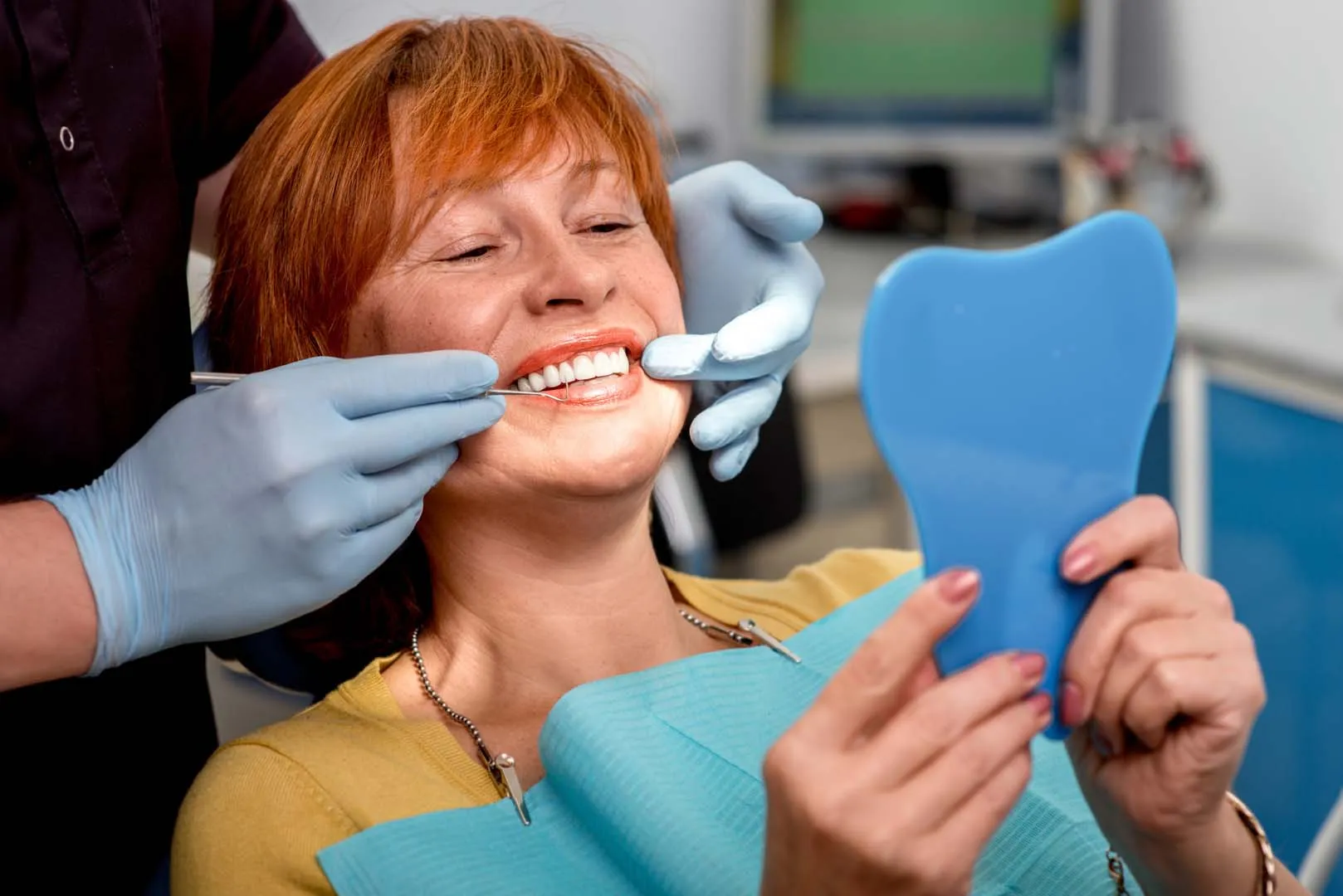
At Vero Beach Surgical Arts, Dr. J. Andrew Colgan has performed hundreds of full arch cases and developed his own proprietary protocol (Hybrid Express Platinum) for delivering predictable, durable, esthetic results. Patients travel to Vero Beach from across Florida and beyond for this work.
What Full Arch Restoration Is (and Is Not)
Full arch restoration is a category that includes treatments often marketed under brand names like All-on-4, All-on-6, All-on-X, and others. The common concept is the same: four to six implants placed in strategic positions across an arch, with a fixed bridge attached to them.
What it is not:
- It is not a removable denture
- It is not a snap-in or snap-out prosthesis (those are called implant-supported overdentures, a different treatment)
- It is not the same as replacing individual missing teeth with individual implants
The bridge in full arch restoration is removable only by your surgeon or restorative dentist for maintenance. You do not take it out.
Full Arch Restoration vs. Traditional Dentures
This is the comparison that matters most to patients exploring this treatment.
Full arch implants (fixed):
- Anchored to four to six implants fused with the jawbone
- Do not move, slip, or come out
- Allow you to eat virtually any food
- Preserve the jawbone (the implants stimulate bone the way natural roots do)
- Maintain facial structure long-term
- Speech is natural
- No adhesives, no soaking, no overnight removal
- Daily cleaning with a water flosser and small brushes
- Highest up-front cost, but typically the lowest lifetime cost
Traditional dentures (removable):
- Rest on the gums; rely on suction (and adhesive) for retention
- Slip during eating, speaking, or laughing for many wearers
- Difficult to eat hard or chewy foods
- The bone underneath continues to shrink (resorbs) over years
- Facial structure changes over time as bone is lost (the “collapsed” look around the mouth)
- Often need to be relined or replaced as the bone shape changes
- Need to be removed for cleaning and overnight soaking
For patients who have been wearing dentures for years, the shift to fixed full arch teeth is often the single biggest functional improvement they have experienced.
All-on-4 vs. All-on-6 vs. Other Configurations
The number of implants used to support a full arch bridge depends on the patient, not on a brand name. Common configurations:
- Four implants per arch. Often called All-on-4. Suitable for many patients, especially in the lower jaw where bone density is higher.
- Five or six implants per arch. Sometimes recommended for the upper jaw, where bone density is typically lower, or for patients with very strong bite forces.
- More than six implants. Used in select cases for added durability or to support segmental restorations.
The right configuration for you is determined by your 3D scan, bone quality, bite forces, and prosthetic plan. Dr. Colgan does not impose a single approach on every patient.
When Full Arch Restoration Is the Right Answer
You may be a candidate if:
- You have failing or missing teeth across an arch
- You wear a full or partial denture and want a fixed alternative
- You are tired of the cost and effort of repeatedly restoring failing teeth one at a time
- You have enough bone (or are a candidate for grafting where needed)
- You are committed to the maintenance routine and follow-up visits
- You are in reasonable general health and not a heavy smoker
A 3D scan and a full consultation with Dr. Colgan are essential to determine candidacy. Some patients are best served by a different approach (single implants, a partial denture, or staged treatment); we will be honest about that.
The Day of Surgery
For qualifying patients, the day of surgery includes extraction of remaining failing teeth, placement of the implants, and delivery of a fixed temporary bridge. This is what most practices mean by Teeth-In-A-Day or same-day teeth.
A typical day of surgery looks like this:
- Morning arrival. You arrive with your escort. Vital signs are checked, the IV is placed, and final imaging is reviewed.
- Sedation begins. IV sedation is administered. You drift off and have no memory of the procedure.
- The procedure. Extractions, implant placement, and bite registration for the temporary bridge. Typical time in the chair is three to five hours.
- Recovery. You wake in our recovery area. The temporary bridge is delivered later the same day or the morning after, depending on the case.
- Discharge. You go home with your escort, your post-op instructions, your prescriptions, and the practice’s direct line for any questions.
The Treatment Timeline
A typical full arch treatment unfolds as:
Visit 1: Consultation. 3D imaging, treatment planning, written cost estimate, financial review.
Visit 2: Day of surgery. Extractions, implant placement, immediate temporary bridge (for Teeth-In-A-Day candidates).
Healing period: Three to six months. The implants integrate with the bone. You wear the temporary bridge during this time and follow soft-diet guidance.
Final restoration. Once integration is confirmed, your final, custom-designed bridge is delivered.
Long-term maintenance. Regular hygiene visits to keep the implants and bridge in excellent condition.
Bridge Materials
Final bridges are crafted from various materials. The most common options are:
- Hybrid acrylic (often called “hybrid” bridges). Acrylic teeth bonded to a titanium framework. Lower cost, lightweight, esthetic, repairable.
- Zirconia (a strong, esthetic ceramic that resists staining and chipping). Higher cost, exceptional durability, and life-like appearance.
- Other ceramic options depending on the case.
Dr. Colgan will discuss material options with you and recommend what suits your bite, esthetic goals, and budget.
Hybrid Express Platinum: Our Proprietary Protocol
Dr. Colgan developed and refined the Hybrid Express Platinum protocol for full arch cases. It combines a specific approach to surgical planning, implant positioning, immediate bridge design, and prosthetic finishing that has been recognized as a premier protocol for predictable outcomes. Many of our full arch cases follow this protocol.
The result is a refined version of what other practices market as All-on-4 or All-on-X, drawn from years of clinical experience with what works and what does not.
What Patients Tell Us
After full arch restoration, patients often describe a return to eating foods they had avoided for years, a renewed willingness to smile in photos, and an end to the daily anxiety of denture slippage. Many describe the experience as the single best dental decision they have made.
Read patient reviews to hear directly from people who have had this work done at our practice.
Frequently Asked Questions
How is full arch restoration different from dentures?
Dentures rest on the gums and rely on suction (and adhesive) for retention. Full arch restoration is anchored to dental implants that fuse with the bone. The bridge does not move, does not come out, and feels and functions like natural teeth.
How many implants do I need?
Most arches are restored with four to six implants. The exact number depends on your anatomy, bone volume, bite forces, and the prosthetic design. Dr. Colgan determines this during treatment planning based on your 3D scan.
Will I have teeth the same day as surgery?
For most candidates, yes. Our Teeth-In-A-Day approach allows extraction, implant placement, and delivery of a fixed temporary bridge in a single visit. A small number of cases require a brief healing period before the bridge is attached.
How long does the treatment take?
Most patients are in fixed temporary teeth on the day of surgery and in their final bridge within three to six months.
Will my insurance cover it?
Coverage varies. Some plans cover a portion of the surgical fees, the implants, or the final bridge. Medicare does not cover most dental implants, though Medicare Advantage plans may include partial dental benefits. Our team verifies your benefits and provides a written estimate. Financing options are available through PatientFi and CareCredit.
Is it painful?
Most patients describe the recovery as much easier than expected. Surgery is performed under IV sedation. Post-op discomfort is managed with prescription medication for a day or two, transitioning to over-the-counter medication.
How long does the bridge last?
Properly placed and maintained implants are designed to be permanent. The bridge itself may need refurbishment or replacement after many years of use, depending on material and wear. Many patients enjoy their original bridge for 10 to 20 years or more.
What happens if I do not have enough bone?
Bone grafting, sinus lifts, and ridge augmentation can rebuild the foundation when bone volume is limited. In many cases, modern planning and angled-implant placement allow us to work around limited bone without major grafting. Dr. Colgan will tell you honestly whether grafting is needed.
How do I care for the bridge?
Daily cleaning with a water flosser and small brushes, regular professional hygiene visits, and periodic check-ups with Dr. Colgan. The cleaning routine is straightforward and quickly becomes second nature.
Will I be able to eat normally?
Yes. Most patients return to a normal diet (including hard and chewy foods that dentures could not handle) once the implants have fully integrated. The soft-diet period is temporary and applies only during the initial healing phase.
Can I have both arches done at the same time?
Often yes. Many patients have full mouth reconstruction (both arches) in one surgical visit. Recovery is more involved than for a single arch but is well tolerated by most patients.
What if I have a medical condition?
Many patients with chronic conditions (diabetes, heart disease, controlled autoimmune conditions) are good candidates. Some conditions require additional planning. Dr. Colgan reviews your full medical history at consultation.
Are these the same as All-on-4?
All-on-4 is one brand of full arch implant treatment. Full arch restoration is the broader category that includes All-on-4, All-on-6, All-on-X, and proprietary protocols like our Hybrid Express Platinum. The core concept (a fixed bridge supported by multiple implants) is the same; the differences come down to surgical approach, implant count, materials, and protocol refinement.
Lorem ipsum dolor sit amet, consectetur adipiscing elit, sed do eiusmod tempor incididunt ut labore et dolore magna aliqua. Ut enim ad minim veniam, quis nostrud exercitation ullamco laboris nisi ut aliquip ex ea commodo consequat. Duis aute irure dolor in reprehenderit in voluptate velit esse cillum dolore eu fugiat nulla pariatur.

Start Your Journey
Whether you were referred by your dentist or are seeking a second opinion, your first step is a personal consultation with Dr. Colgan.